ERP for Construction vs. Construction Software: What Is the Difference and How Do You Choose?

Construction companies rarely start looking for new software because they want “digital transformation.” They start looking because something is not working.
Materials go missing. Hours come in late. Payroll takes too long to check. Project costs are harder to track than they should be. The office, the warehouse, and the field team all have pieces of the information, but nobody has the full picture at the right time.
At first, many companies try to solve these problems with one simple tool. That can help for a while. But as projects grow, teams expand, and daily operations become more demanding, disconnected tools often create new problems instead of solving old ones.
That is where the difference between construction software and ERP becomes important.
Both can improve the way a company works, but they are not built for the same level of control. One usually helps with a single task. The other helps connect materials, hours, projects, and costs into one system.
If you are choosing between the two, the real question is not which label sounds better. The real question is which type of system fits the way your business actually works.
What construction software usually means
Construction software usually focuses on one specific job.
That could be time tracking, scheduling, inventory records, payroll support, daily reports, or document storage. In many cases, these tools are helpful because they are easy to introduce and simple for teams to understand.
For smaller companies, that can be a good starting point. If one process is causing the biggest headache, a focused tool may bring fast improvement.
However, there is also a limit to what standalone software can do.
A time tracking tool can collect hours, but it may not connect those hours to project costs. An inventory tool can show what is in stock, but it may not show how materials moved between warehouse, vehicle, and jobsite. A reporting tool can create documents, but it may still depend on data being entered correctly from several different places.
That is why many construction companies reach a point where they have more software than before, but still not enough clarity.
What ERP for construction means
ERP for construction is different because it connects the main parts of the business.
Instead of managing materials, labor, projects, and reporting in separate places, an ERP system links them together. That gives managers a better view of what is happening across the company, not just inside one task.
In practice, that can mean:
- material leaving the warehouse is linked to a project
- employee hours are connected to the same project or cost center
- team activity is visible across office and field operations
- payroll data is easier to check because the source data is already structured
- project costs become easier to understand before problems grow
This is the main value of ERP for construction. It does not just help you record information. It helps you run connected processes.
That becomes especially important when several jobs are active at the same time and many moving parts affect each other every day.
The real difference is control
The easiest way to understand the difference is this:
Construction software usually helps you do one task better.
ERP for construction helps you control how work moves through the business.
That difference sounds small, but in real life it is huge.
A standalone tool may improve one area, but management still has to connect the rest manually. That often means spreadsheets, calls, follow-ups, and last-minute corrections.
An ERP system reduces that gap because the data is connected from the start.
For example, if you want to know whether a project is profitable, you need more than revenue. You need labor, materials, time, and other costs to be connected to the same job. Without that, decisions come too late.
So the real choice is not between “simple” and “advanced.” It is between isolated information and connected control.
Common problems that show when a company needs more than one tool
Most construction companies do not switch to ERP because of one big event. They switch because the same operational problems keep repeating.
Lost or unclear material
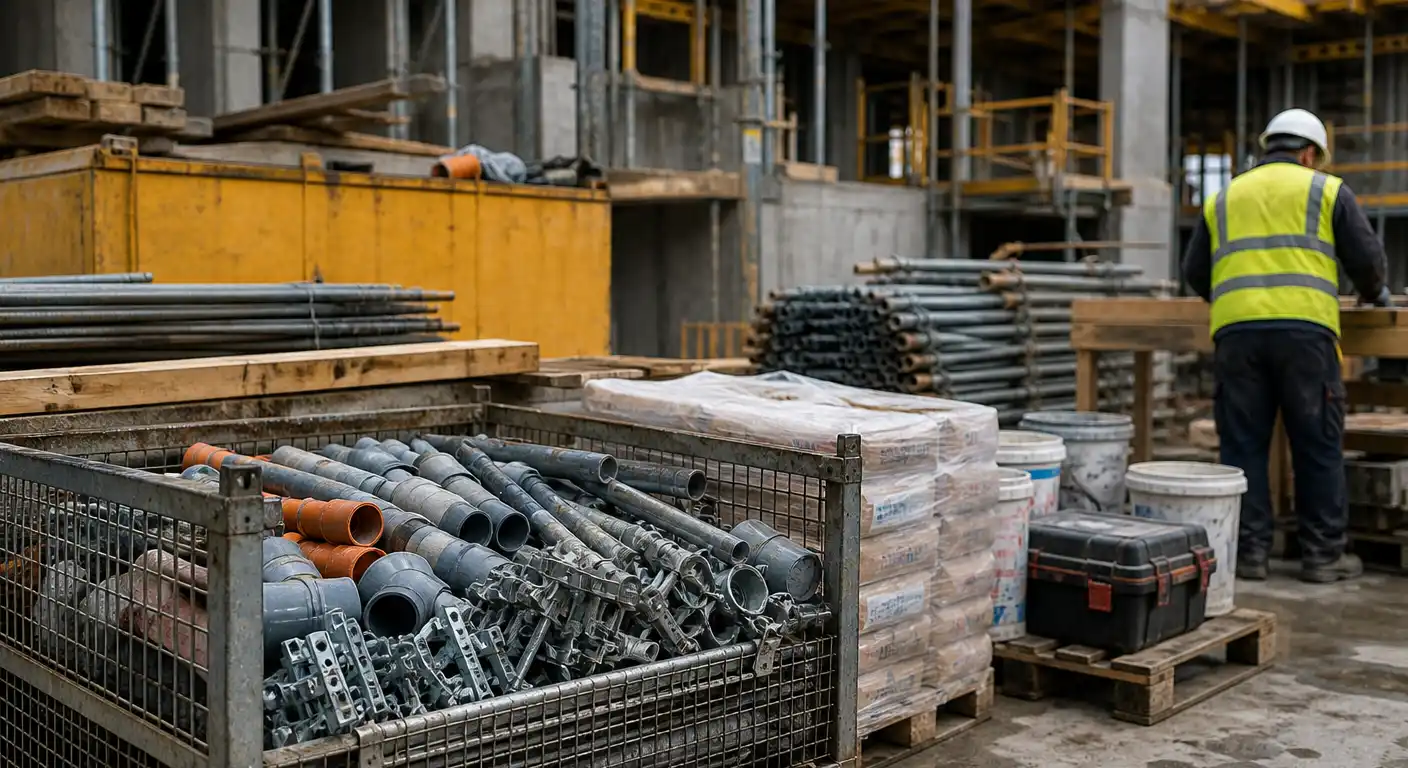
This is one of the most common issues in construction. Material moves between warehouse, vehicles, workers, and jobsites. After a while, nobody is fully sure where everything is or who last received it.
A basic inventory tool may help with records, but if you need real traceability across locations and projects, ERP is usually a better fit.
Payroll issues and late hours
Hours often come in late, from multiple sources, or with missing details. Supervisors send one version, workers report another, and administration spends too much time checking what is correct.
Time tracking software can improve collection. But if you also need approvals, project-based tracking, and clearer reporting, ERP creates much more value.
Poor visibility into project profitability
Many construction companies know what they billed, but not what the project really cost until much later.
Labor may be tracked in one place. Materials may be tracked in another. Other costs may sit in spreadsheets or be reviewed only at the end of the month. By the time the full picture is clear, it is often too late to react.
ERP helps because it connects these numbers earlier and makes project control more practical.
Too many calls, messages, and spreadsheets
When teams are always calling each other for updates, the process is already too manual.
The office asks the warehouse. The warehouse asks the site. The site sends an update later. Then somebody enters that information into a spreadsheet. This creates delays and mistakes.
A connected ERP system helps reduce those gaps by putting more of the workflow in one place.
When simple construction software is enough
Not every company needs a full ERP system right away.
A simpler tool may be enough if your company is still small, runs only a few projects at a time, and has one main issue to solve first. In that situation, starting with one focused solution can be the smartest move.
For example, if your biggest problem is hours, a time tracking tool may be enough for now. If your biggest problem is stock visibility, an inventory tool may already improve daily work.
There is nothing wrong with starting small.
The key is to make sure the first step does not become a dead end later.
When ERP becomes the better choice
ERP becomes the better choice when the business starts feeling disconnected.
That usually happens when you manage several active projects at once, materials move between multiple locations, employees work in the field, payroll corrections happen often, and project reporting takes too much manual effort.
At that point, adding more separate tools often makes the situation worse. Instead of solving the core problem, it spreads information across even more places.
ERP solves that by building structure around the way the company already works.
It gives management a better overview, reduces duplicate work, and makes it easier to connect daily activity with financial results.
How to choose the right system
The best system is not the one with the longest feature list. It is the one that matches your daily operations.
Start with a few practical questions.
How many active projects do you manage at the same time?
How often do materials move between warehouse, vehicles, and jobsites?
Do field teams need mobile access?
Do hours need to be linked to projects or cost centers?
How much time does payroll checking take every month?
How many important reports still depend on spreadsheets?
These questions will show whether you need a simple tool or a more connected system.
In many cases, the best approach is to start with one high-impact area, such as material control, time tracking, or project cost visibility. Then, once that part works well, expand into other processes.
That approach keeps implementation practical while still building toward a stronger system.
Final thoughts
Most construction companies do not decide between construction software and ERP by comparing definitions. They decide by looking at the pressure inside the business.
If one isolated task is the problem, a focused tool may be enough.
But if the real problem is that materials, hours, projects, and costs are not connected, then the solution also needs to be connected.
That is when ERP for construction becomes the better choice.
Not because it sounds bigger. Not because it is more technical. But because it gives the business the level of control that construction work actually requires.
Common Questions About ERP for Construction
What is the difference between ERP for construction and construction software?
Construction software usually solves one specific problem, such as time tracking, scheduling, or inventory. ERP for construction connects several business processes, including materials, labor, projects, and cost control, in one system.
Is ERP too much for a small construction company?
Not always. A small company may not need every feature from the beginning, but it can still benefit from a system that connects important workflows and can grow over time.
When should a construction company move from standalone tools to ERP?
Usually when projects become harder to manage, materials move across several locations, payroll corrections happen often, or reporting depends too much on spreadsheets and manual work.
Can ERP help reduce lost material?
Yes. ERP can improve traceability by tracking material movement between warehouse, vehicles, workers, and projects. That makes missing stock and duplicate orders easier to prevent.
Can ERP improve payroll and time tracking?
Yes. ERP can connect employee hours to approvals, projects, absences, and reports. This helps reduce payroll errors and saves administrative time.
What should construction companies look for when choosing ERP?
They should look for mobile usability, material traceability, project-based cost tracking, simple onboarding, and the ability to start with one process and expand later.
Is it better to start with one module first?
In most cases, yes. Many companies get the best results by starting with one area, such as time tracking or material control, and then adding more functions once the first step is stable.
Not enough?
Request an agent!
Our agent will give you a live demonstration of the system and show how you can simplify work and save time and costs.
Order now
Keep reading
All blog posts