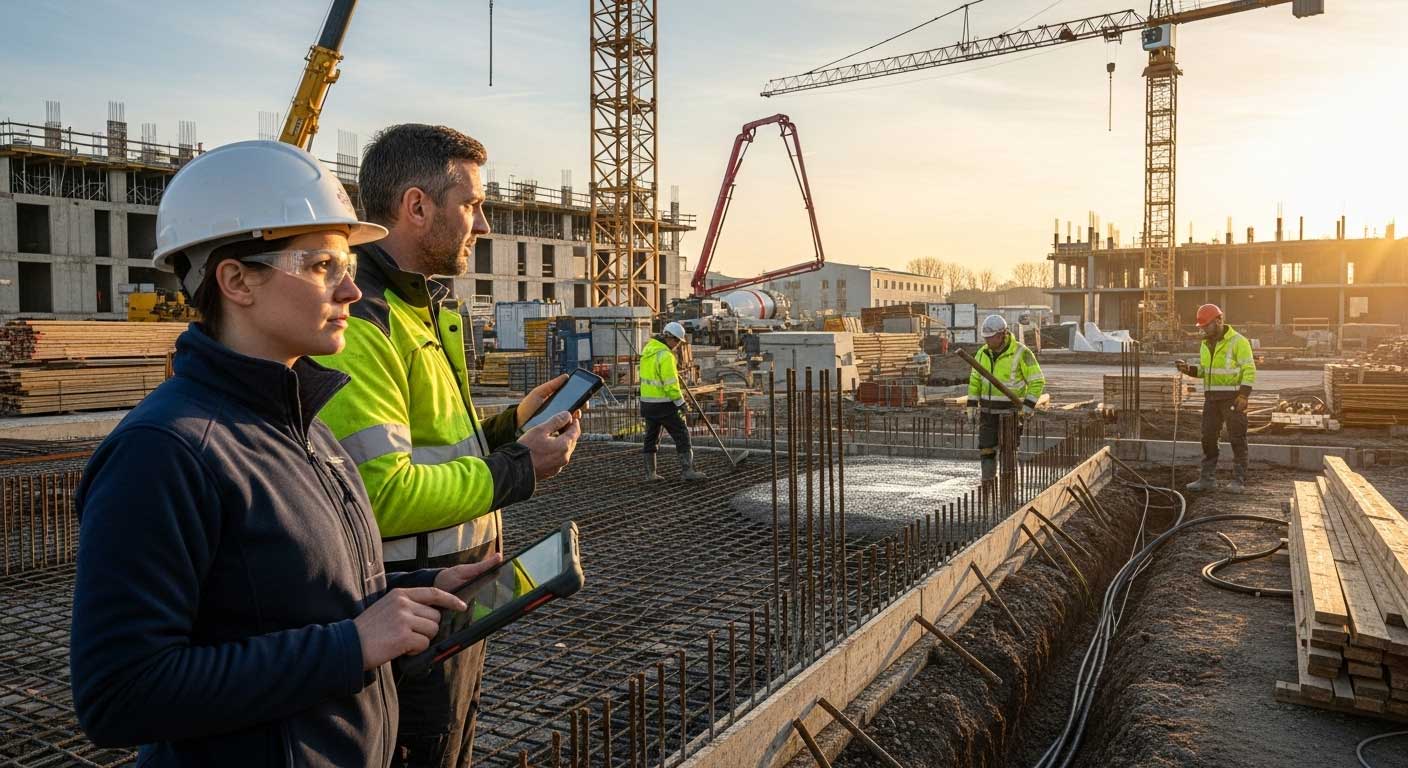
The Digital Transformation of Construction: How ERP Boosts Efficiency Across Projects, Warehousing and Workforce Management
The construction industry is one of the most complex business environments. Companies manage people, projects, materials, vehicles, subcontractors and costs simultaneously — often still on paper logs and spreadsheets.

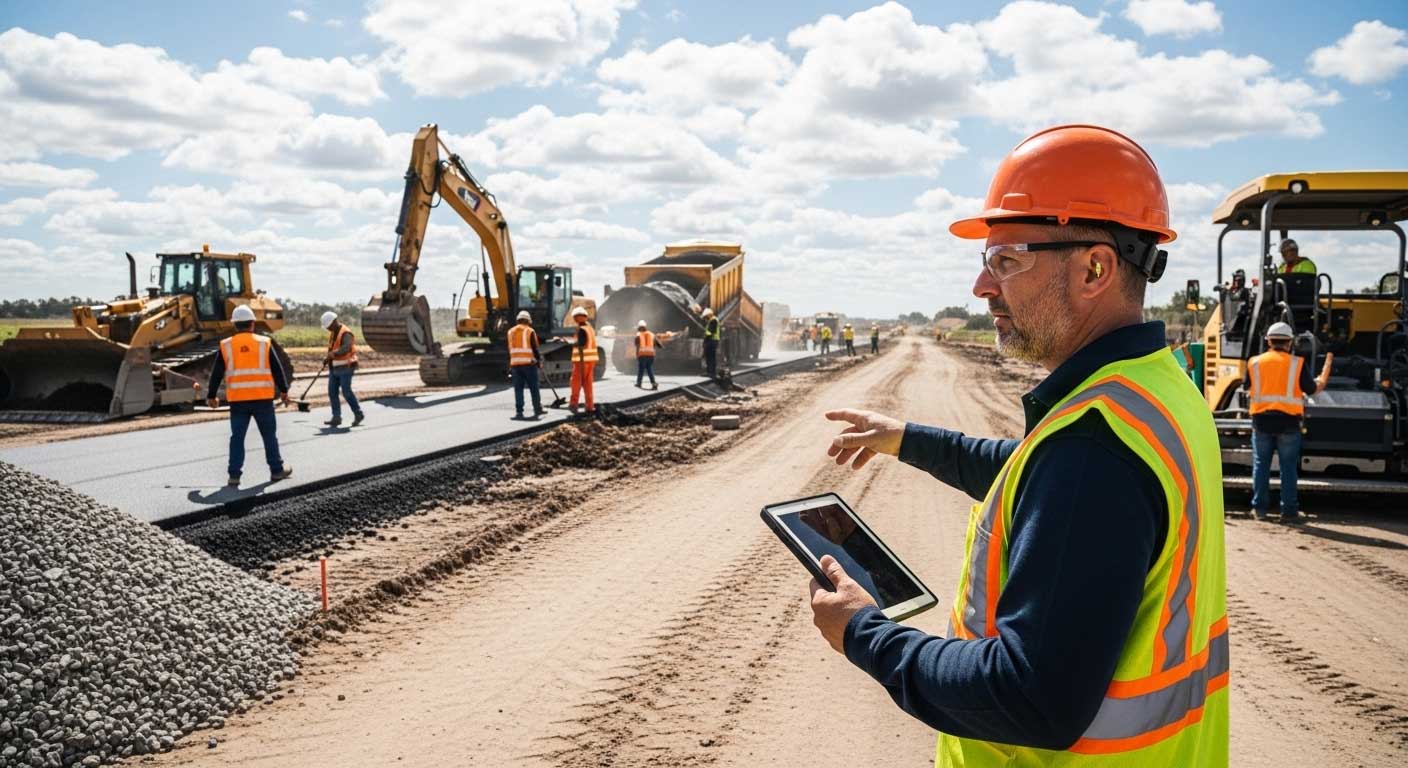
The construction industry is one of the most complex business environments there is. Companies need to manage people, projects, materials, vehicles, subcontractors and costs simultaneously — and all of it moves every day.
Many businesses still rely on paper logs, Excel spreadsheets, or a collection of disconnected tools. This often leads to mistakes, wasted time, and unnecessary costs. Digital transformation is not about replacing people with software. It is about removing the friction that stops good people from doing good work.
Where the time actually goes
Ask any site manager where their week disappears and the answer is rarely "building things". It is phone calls to find out who is where, chasing timesheets, looking for material that should be on site, and rebuilding numbers that already exist somewhere else.
- re-entering the same data into different files
- phoning around to confirm what was already agreed
- searching for material, tools or documents
- reconstructing hours at the end of the month
- explaining project costs that arrive too late to influence
None of this is productive work, and none of it is anybody's fault. It is what happens when information lives in too many places.
What an ERP changes across projects
When projects are structured with cost centres, every hour and every material movement has a place to land. Labour, materials, machine time and purchases accumulate against the job as they happen, so a project manager can see the cost picture forming rather than receiving it afterwards.
The practical effect is time to react. An overrun spotted in week three can still be corrected. The same overrun discovered at handover is simply a loss to be explained.
What it changes in the warehouse
Warehousing is where construction companies quietly lose money. Material is bought twice because the shelf looked empty. Tools disappear between sites. Stock that was issued to one project ends up consumed by another with no record.
A digital warehouse makes every receipt, issue, transfer and return a logged movement with a person, a time and a project attached. Stock levels stay current because they follow real actions, and material cost reaches the project the day it is consumed.
What it changes for the workforce
Workforce management covers three things that are usually handled separately: who is available, who is assigned, and what they actually did. When these sit in one system, planning stops being guesswork.
- availability and certificates come from the employee record
- assignments reach the field on mobile, instantly
- hours are logged daily against the assigned project
- approved hours feed both payroll and job costing
The person planning next week can see who is genuinely free and qualified, rather than ringing round to find out.
Vehicles and equipment
Machines are often treated as a fixed asset and then forgotten. Yet a van, an excavator or a lift carries real running costs — fuel, service, inspections, insurance — that belong on the projects they worked on.
Tracking usage by project turns machine time into a real line in job costing, and service reminders turn maintenance from an emergency into a plan.
Starting the transformation without disruption
The biggest reason digitalisation projects fail is that companies try to change everything at once. A better approach is sequential: fix the area with the most pain first, prove it works, then extend.
Final thoughts
Digital transformation in construction is not a technology project. It is an operational one. The software matters less than whether the people on site will actually use it.
Start where the pain is greatest, keep the first step small enough that the field team barely notices the change, and let the results make the case for the next step.